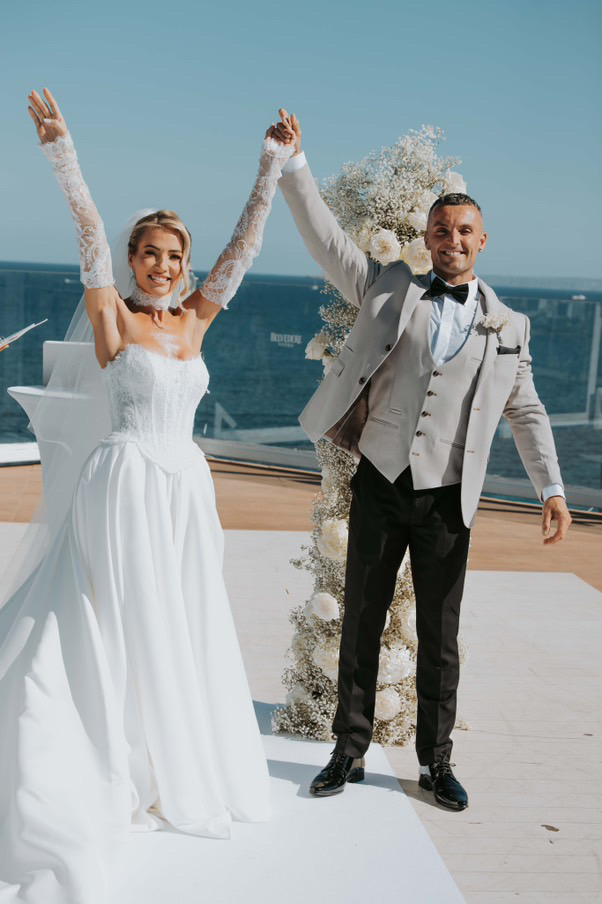
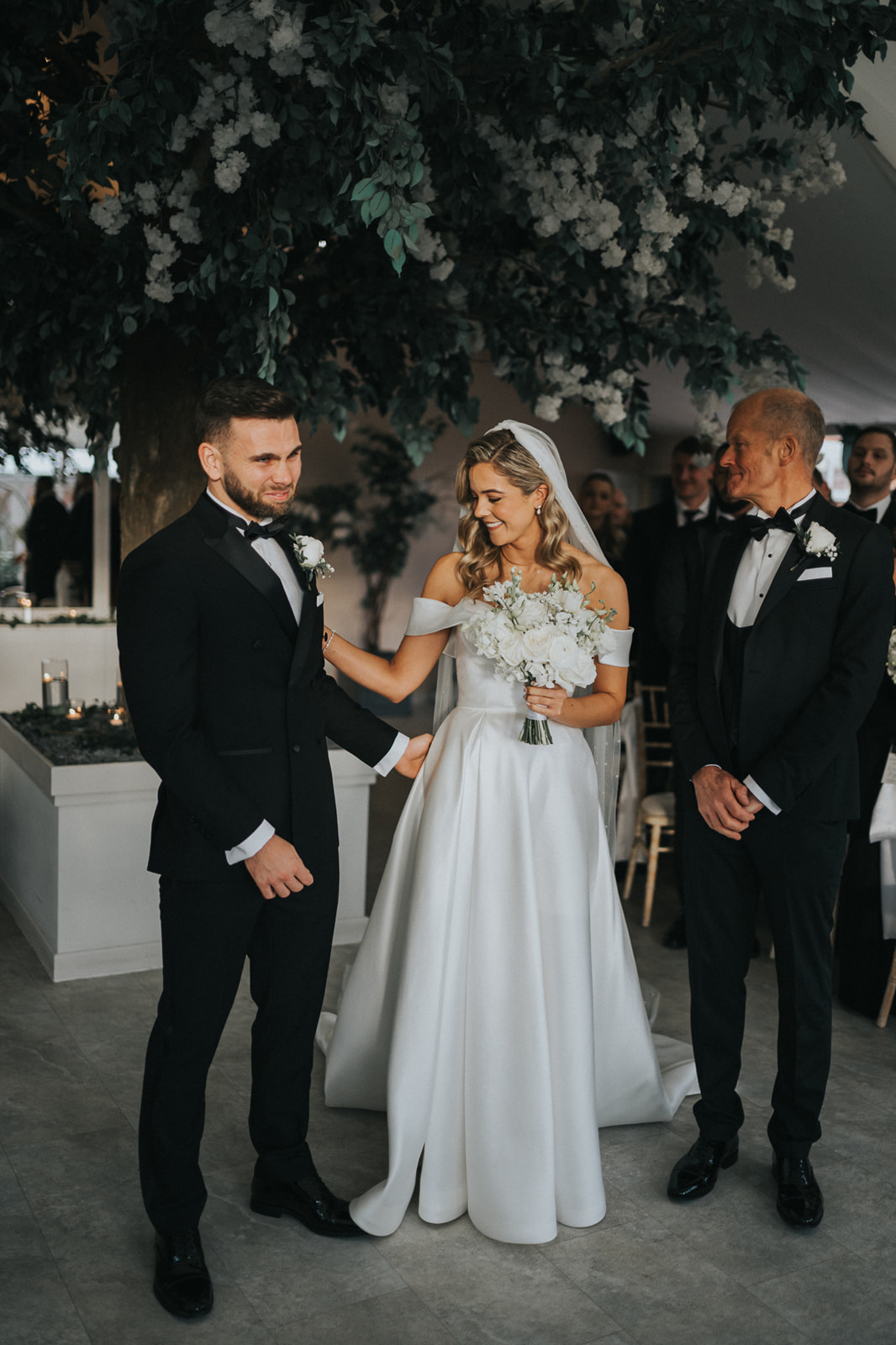
Most men have worn an ill-fitting suit jacket at some point, whether it was borrowed for a last-minute occasion or picked off the rail without a second thought. The shoulders were slightly too wide, the chest pulled when buttoned, and the sleeves swallowed the shirt cuff.
Fit is the single most important thing about a suit jacket. Whilst the fabric, the colour, and the lapel width all matters, none of it saves a jacket that doesn’t fit correctly. A well-fitted suit jacket in a mid-range fabric will always look better than an expensive jacket that sits wrong on your shoulders.
If you’re currently looking for a wedding suit, a race day suit or a black tie event suit, here is what to look for when shopping for a suit jacket.
What To Consider When Trying on Suit Jackets
Before committing to buying a suit jacket, it’s worth taking the time to try it on properly and assess a few key areas to ensure it fits your frame. While we can tailor and make adjustments, getting the fit as close to perfect as possible from the outset will save you time, money, and ensure you look smart and put together.

The Shoulders
The shoulder seam of your suit jacket should sit exactly at the edge of your shoulder, not hanging over it and not pulling inward. If the seam is sitting even half an inch too far down your arm, the whole jacket can look too big on you.
If it’s pulling inward, you’ll see a ridge of fabric running down from the shoulder toward the sleeve. This is also typically one of the hardest parts to alter on a suit jacket. Get the shoulders right first. Everything else can be worked around.
The Chest
When you button the jacket, it should close cleanly without pulling. If you see an X shape forming across the button, the chest is too tight. If there’s a visible gap between the lapels and your chest when it’s buttoned, it’s too big. There should be enough room to slide a flat hand inside the jacket without forcing it. More than that and it’s too loose. Less than that and you’ll feel it every time you move your arms.
You can test out the fit when you’re trying on the jacket. Button the jacket and stand naturally. Walk a few steps. Raise one arm slightly. If the jacket rides up dramatically or strains across the back, the chest fit isn’t right.
The Length
How long should a suit jacket be? The jacket should cover your seat. Stand naturally and let your arms hang at your sides. The hem should fall roughly in line with your knuckles. This isn’t a rule that applies identically to every body type, but it’s a reliable starting point.
Too short and the jacket looks imbalanced, like a cropped version of what it should be. Too long and it starts to swamp you, adding length without adding anything else.
The Waist
A well-fitted jacket has a subtle taper at the waist but not a dramatic hourglass shape, just a slight narrowing that follows the natural line of the body. Without it, the jacket can look boxy and shapeless regardless of how good the fabric is.
If the jacket is slightly too straight through the waist, this is something that can be tailored. It’s one of the most common alterations and one of the most worthwhile.
The Sleeves
The sleeve should end at the base of your wrist, showing roughly half an inch to three quarters of an inch of shirt cuff below it. This is the detail that most people notice without knowing why a suit looks well put together.
The shirt cuff peeking out below the jacket sleeve is a small thing that makes a significant visual difference. If the rest of the suit fits but the sleeves are slightly long, this can be tailored to shorten them without affecting the rest of the suit. Don’t let sleeve length put you off a jacket that fits well everywhere else.
The Back
When you put the jacket on, ask someone to look at the back. There should be no horizontal creases pulling across the upper back, these mean the jacket is too tight across the shoulders or chest. There should also be no excess fabric bunching at the collar or draping loosely down the back because this means it’s too big.
The back of a well-fitted suit jacket should lie flat and smooth. If it doesn’t, the jacket isn’t the right fit for your body shape, and no amount of other adjustments will fully fix it.
What This Means at a Suit Fitting
When you come in for a suit appointment at Groom, we’ll be paying particular attention to the fit of the jackets when you try them on. This gives us a good idea of whether you need to change size or style, and what would need altering to fit you perfectly.
A lot of men come in having bought a suit somewhere else that never felt quite right and couldn’t work out why. In some cases it’s the shoulders not fitting right or it could be the chest. Sometimes it’s everything at once. This is why a suit appointment is so important as our team will ensure you are measured and fitted properly.
The difference between a suit that looks like it belongs to you and one that looks like you borrowed it almost always comes down to these details. They’re not complicated. You just need someone who knows what they’re looking at.
How a Morning Suit Fits
Do morning suits fit differently to regular suits? Yes and no. The fit principles are largely the same. The shoulders should sit correctly, the chest should close cleanly, and the sleeves should show the right amount of cuff, however there are a few differences worth knowing about.
Morning coats are cut differently by design. The front is shorter and cut away, with the tails extending at the back. This means the length rules that apply to a regular suit jacket don’t apply in the same way as the shape is intentional rather than a fit issue.
The short answer is that the fundamentals of good fit still apply, but because morning suits have a more specific and traditional cut, getting them properly fitted matters even more than it does with a regular suit.

Key Takeaways
Fit matters more than fabric, colour, or any other detail. Start with the shoulders, as the seam should sit exactly at the edge of the shoulder. The chest should close cleanly when buttoned with enough room to slide a flat hand inside, while the hem should cover your backside and fall roughly in line with your knuckles.
A subtle taper at the waist follows the body’s natural shape, and around half an inch of shirt cuff should be visible below the sleeve. The back should lie completely flat, as any creasing or bunching is a sign the jacket isn’t right for your body shape. Waist and sleeve length are both straightforward alterations, but shoulders and back issues are a bit more complex, so getting those right from the start is essential.
If a suit has never felt quite right, there’s almost always a specific reason, and getting properly measured and fitted by someone who knows what they’re looking at makes all the difference.