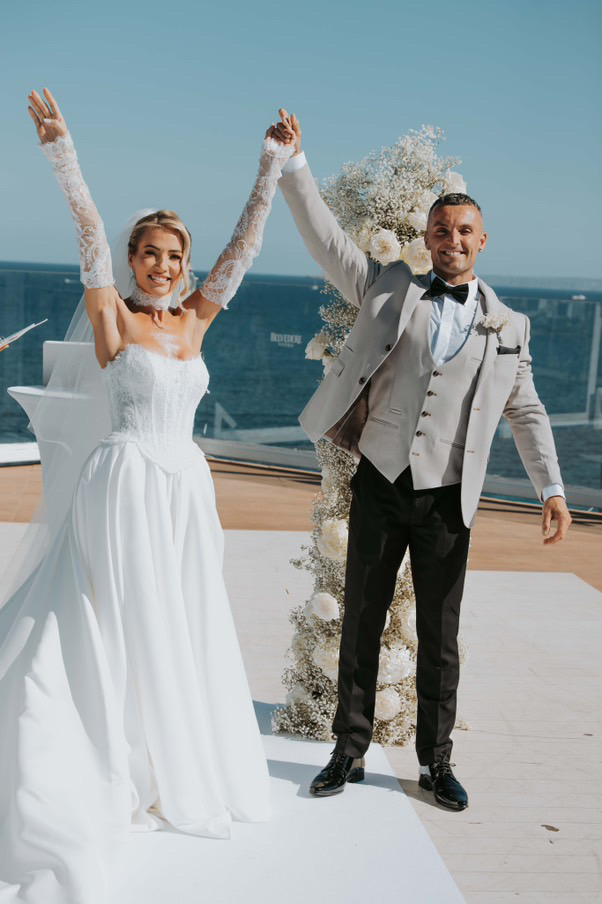
Looking your best on your wedding day starts with the right fit. Whether you’re going for classic elegance or a modern twist, a well-fitted suit will help you feel confident, comfortable and camera-ready.
But getting the perfect fit can sometimes be easier said than done. There are lots of things to consider, including tailored vs. off the rack, choosing a suit you can move and dance in, and what to do about last minute issues.
You’ll also need to know how long before the wedding to book your suit fitting, and how many fittings you should have.
Why Fit Is Everything on Your Wedding Day
A well-fitting suit elevates your entire look, while a poorly fitted one can potentially leave you feeling uncomfortable and underdressed. A great fit means bags of confidence and stunning photos, while a bad fit can be an unwelcome distraction from what should be the best day of your life.
Tailoring vs. Off-the-Rack
Off-the-rack suits can be tempting for convenience and cost, but they’re made to fit a range of body types and not necessarily your unique shape.
Even if the size feels “about right,” subtle issues like shoulder width or sleeve length can throw the whole look off. Tailoring gives you a bespoke suit, one that feels like it was made just for you, and that’s simply because it was.
First Impressions Matter in Photos and in Person
Whether it’s the walk down the aisle or a candid photo during the reception, your suit will be seen from every angle.
Baggy jackets, sagging trousers or tight waistcoats stand out for all the wrong reasons, especially in high-resolution photos. You don’t want to be left cringing at your wedding album years later because of a poor fit, or a crease you didn’t spot.
One way to be sure is to check ahead of the day, hanging your suit out after trying it on and making sure nothing’s stuck. Learning tips on travelling with a suit could be useful, such as how to fold it to avoid wrinkling, or ways to steam out stubborn creases in a hotel room.
Common Suit Fit Mistakes to Watch For
Even the most stylish wedding suit can fall flat if it doesn’t fit properly. Here are a few of the most common issues grooms face.

Jacket Too Tight or Too Loose
Your jacket should contour your torso without pulling or sagging, but this can be a tricky balance to get right.
A too-tight jacket will cause wrinkles around the buttons and restrict movement, while a loose one can look a little sloppy.
A good way to check the fit is by looking at the shoulders, checking that the seam sits right where your shoulder ends. If that’s off, it’s likely that the whole jacket will look wrong.
Trouser Length: Break or No Break?
Trouser length can make or break the look – quite literally. A full break (where fabric folds over the shoe) is traditional, but can look a little dated or messy if overdone.
A slight break or no break offers a more modern, tailored appearance. The key is ensuring the trousers aren’t too long or too short. Ideally, they should graze the top of your shoe without the fabric pooling, and without revealing your socks when you’re stood up.
Waistcoat Gaps and Bunching
Your waistcoat should lie flat against your torso without gaping at the chest or pulling at the buttons. If you notice bunching at the back, this is likely because the waistcoat is too long or hasn’t been adjusted properly.
Another small but crucial detail to check is whether the waistcoat covers the waistband of your trousers. Showing your shirt between the two is a definite no-no.
How to Get the Perfect Fit
It might all sound a little complicated, but don’t worry. It’s actually easier than you think to avoid these mistakes and get a great fit. It’s all about a little preparation, attention to detail and of course, good tailoring.
When to Book Your Fittings
Not sure when to get fitted for your wedding suit? Timing is very important, as you don’t want to leave it too late to make changes or fix any issues.
As a general rule, aim to book your suit fitting at least 8 to 12 weeks before the wedding, especially if you’re renting or ordering a custom suit. This leaves enough time for adjustments and avoids a stressful last-minute panic.
If you’re planning to lose weight or hit the gym before the big day, you might also want to schedule a second fitting closer to the wedding (around 2 to 3 weeks before) to ensure everything still fits properly. Even if your shape hasn’t changed, you might still want to have a second fitting if only for your peace of mind.
What to Wear to the Tailor
When heading to your fitting appointment, wear what you plan to wear on the big day, or as close to it as possible. This means:
- The same style of shoes (to get the trouser length right)
- A dress shirt (to assess the fit of the jacket and waistcoat)
- Any accessories you’ll be using (belts or braces, for example)
This helps your tailor make more accurate alterations based on real-life wear, rather than assumptions.
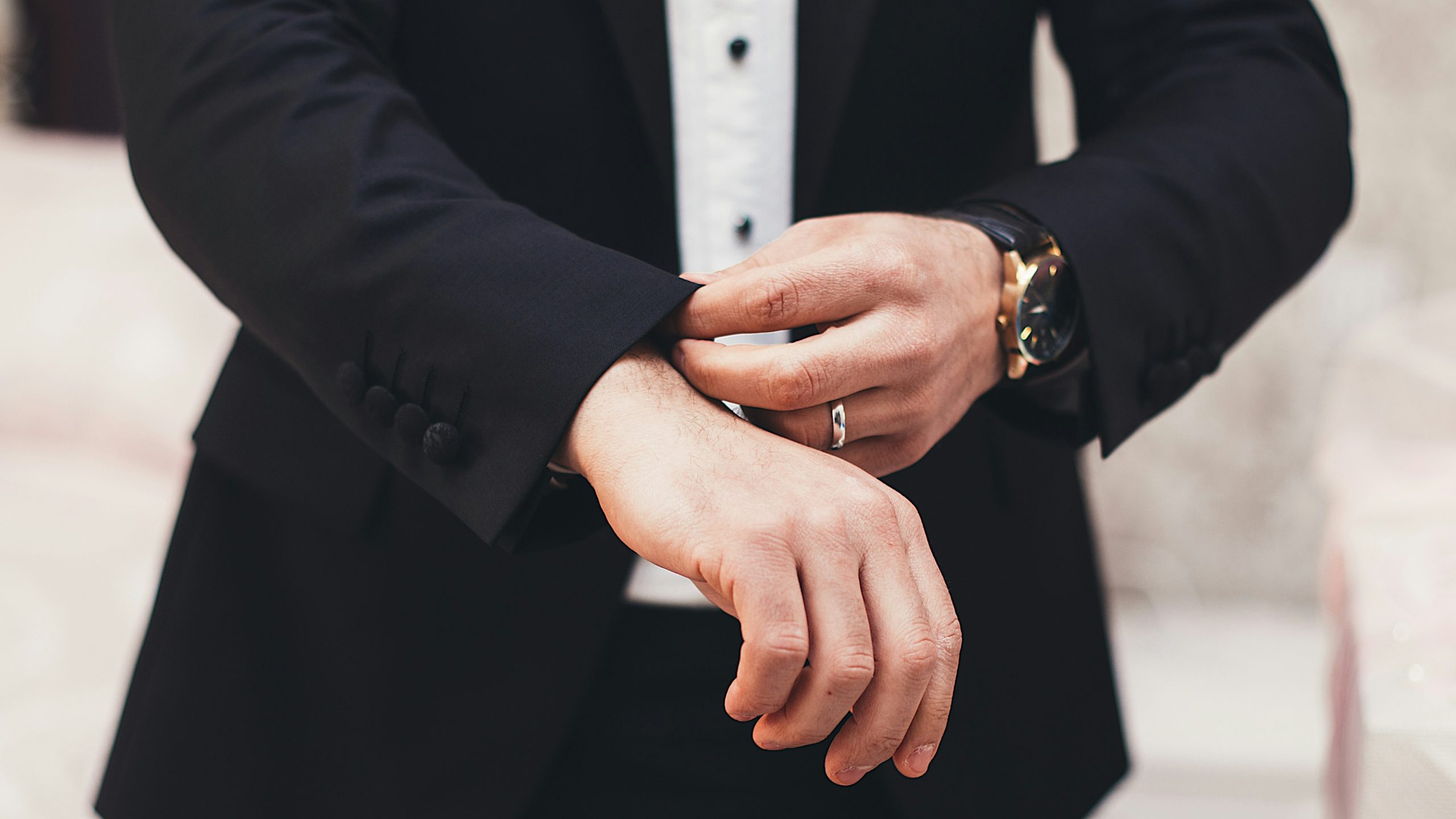
Final Checks Before the Big Day
You’ve done the fittings, the tailoring and the styling. You’re nearly ready for the big day, but there are some final checks to remember. It’s important not to forget these, as they’re the last line of defence against wardrobe disasters on the day.
The Fit Test: Sit, Stand, and Dance
Try on your full outfit a few days before the wedding and move around in it. Sit down, raise your arms, bend over, dance, and test out every scenario you might face on the day.
Things to watch out for:
- Trousers pulling at the crotch when you sit
- Jacket sleeves riding up
- Waistcoat buttons popping open when you move
If anything feels off, it’s better to catch it now while you still have time to fix it.
Emergency Fixes for Last-Minute Issues
If you discover a small issue just before the ceremony, don’t panic. Ask your best man or one of your groomsmen to keep a wedding-day emergency kit on hand, so any issues can be dealt with.
This kit should include a needle and thread, double-sided tape, lint roller and safety pins. These can deal with everything from loose buttons and gaps to pet hair (although you may want to stay away from pets when wearing your wedding suit).
Before the big day, it might be a good idea to check with your suit hire company to see if they offer any emergency support.