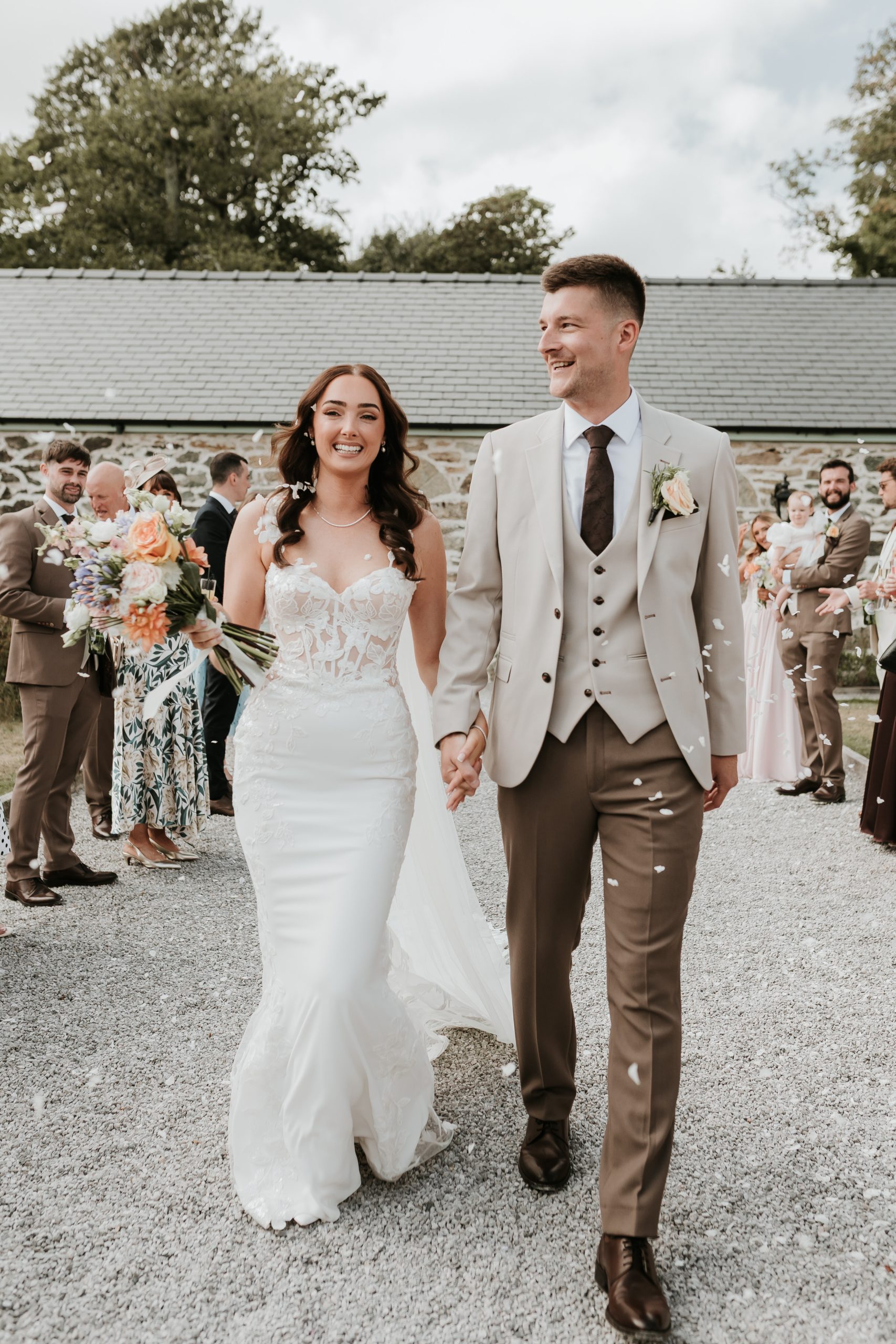
When it comes to looking and feeling amazing in a suit, it really is all about the fit. A great fit on a well-tailored, high quality suit can elevate it to the next level, while a poor fit can make even an expensive piece look shabby.
One of the key areas of the fit to get right is suit trouser length. But what is the correct suit trouser length? Read on to find out all about trouser break, the ideal length for suit trousers and how to get measured properly.
What Is Trouser Break and Why Does It Matter?
When it comes to finding the ideal trouser length, a crucial thing to know about is something called the trouser break. This is simply the crease or fold of fabric where your trousers meet your shoes. There’s no one ‘perfect’ trouser break – although there are definitely no-nos to avoid.
Instead, there are a few different types of trouser break you can choose from based on what works best with your proportions, the style of suit, or simply what look you’re going for.
Here are your options:
- Cropped – where the trousers end above the ankles, offering a fashion-forward look (although it can sometimes be difficult to pull off)
- No break – where the trousers barely touch the top of the shoe
- Quarter/slight break – possibly the most popular option, where the hem of the trousers rests lightly on the shoe. There’s only a tiny ripple or bend in the fabric, rather than a full-on fold.
- Half/medium break – a traditional look where the front fabric of the trouser leg creates a single, distinct fold where it rests on the top of the shoe
- Full break – where a significant amount of fabric folds or ‘pools’ over the shoe. Unless you deliberately intend this look, it essentially means your trousers are too long for you.

How Suit Trouser Length Changes With Fit Style
The trouser break you choose will often be determined by the suit style.
For example, a quarter/slight break is best for tailored and straight fit styles, whereas no break could be a better choice for a slim or skinny fit suit. For anything with a relaxed or traditional fit, you may want to experiment with a medium break.
A few rules of etiquette to remember:
- A wedding suit should ideally have a slight/quarter break for the best silhouette
- A morning suit can have a slight/quarter or medium/half break
- Black tie suits are best with a slight/quarter break or no break, to keep the lines clean and sharp
- Cropped trousers are recommended for more casual occasions, as it can be difficult to balance the silhouette with a formalwear look.
How to Measure Your Trousers for the Right Length
To measure suit trousers correctly, you need to make sure you wear your dress shoes (those you’ll be wearing on the day) and stand up straight. Measure the inside leg, from the crotch seam down to the top of your shoe. The stopping point depends on which trouser break you’ve chosen.
A tailor or suit fitting expert can help with this – get in touch to find out more and book your fitting appointment.
Signs Your Suit Trousers Are Too Long or Too Short
If you give yourself enough time for the wedding or event, you’ll be able to spot if your trousers are too long or short. You can then book in for a quick alteration. This is why it’s always smart to book in multiple suit fittings well in advance, especially for a wedding.
Your suit trousers are too long if they’re pooling heavily over your shoes, or perhaps even dragging on the floor where the back hem touches the ground.
You’ll know if your suit trousers are too short if they ride up excessively when you sit down, or the fabric feels tight or restricted around your calves. Another obvious sign is flashing a bit of ankle, when you’re not wearing intentionally cropped trousers.
How to Get Your Trousers Hemmed Correctly
As well as considering the trouser break and ensuring you have a great fit, it’s also important to get your trousers hemmed correctly.
Again, you’ll want to be wearing your dress shoes when the alteration is made. Here’s how it works:
- Stand naturally, ensuring your weight is spread evenly across both feet
- The tailor will pin the fabric at the end of the trouser legs at the desired trouser break point, and adjust it before the hem is sewn
- The slope will be checked, to ensure a very slight slope down at the back heel
- A thread colour matching the suit fabric is chosen
- The fabric is pressed with an iron to create a crisp crease, and the hem is sewn.
Make sure you try the trousers on again afterwards, just in case any further alterations are needed.
Key Takeaways
- The trouser break is the crease or fold of fabric where your trousers meet your shoes
- There are a few breaks to choose from – cropped, no break, quarter break, half break and full break
- Your trousers are too long if the fabric is pooling or the hem touches the floor
- Your trousers are too short if your ankle is exposed, they ride up when you sit down or they’re too tight on your calves
- To measure for the right trouser length, you’ll need to wear your dress shoes and measure the inside leg down to the top of your shoe at the desired stopping point.