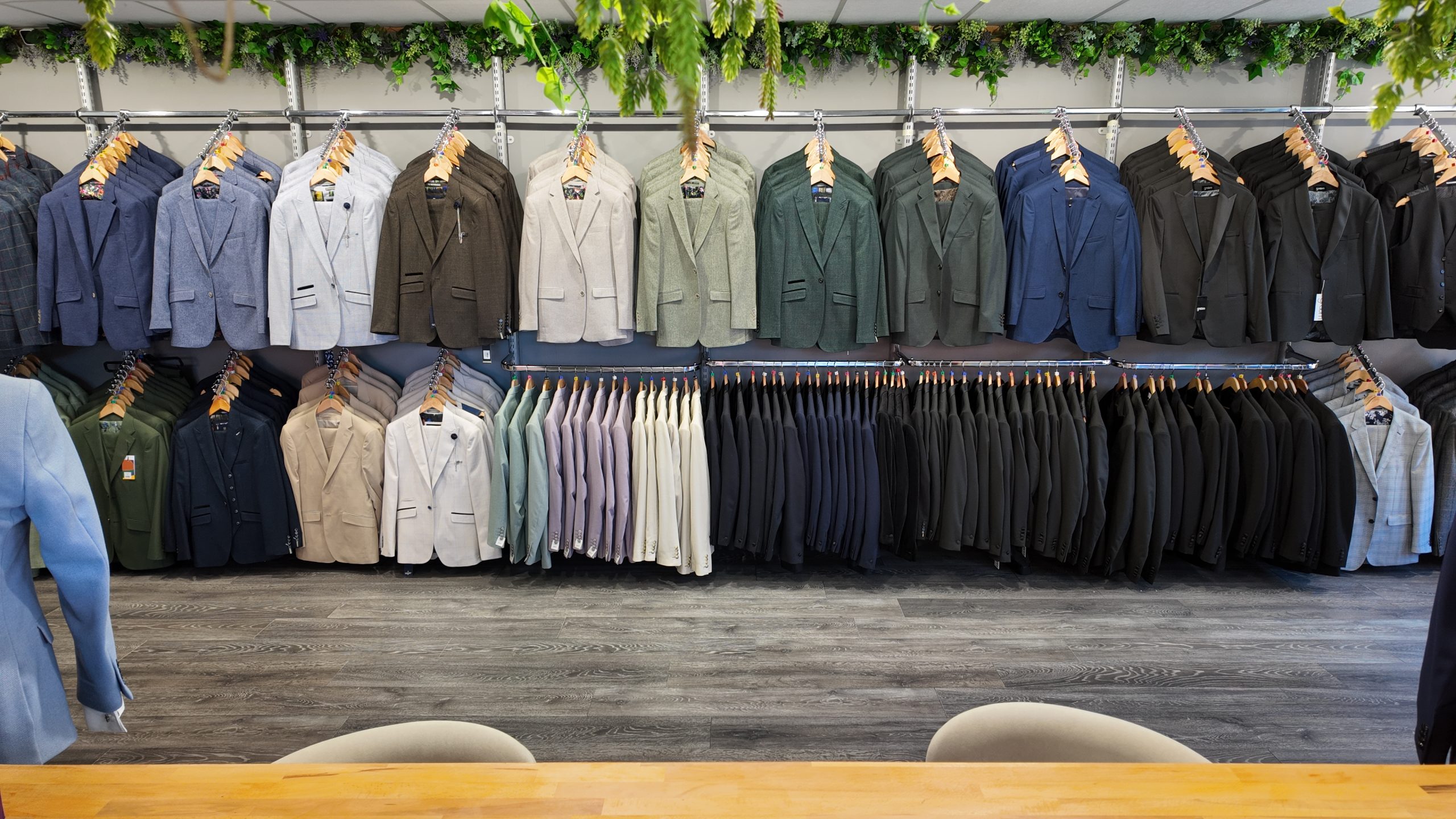
Getting your suit measurements right is the single biggest factor in how good you’ll look in your suit. A suit that fits well will not only make you look your best, but also feel your best. While a suit that fits badly will undo even the best fabric or tailoring.
Whether you are choosing a suit to buy, hiring a suit, or having one made to measure, at Groom we’ll help you take your measurements during your appointment. However it is always useful to know how to measure yourself for a suit.
In this guide we will walk through every measurement you need, how to take it accurately, and the common mistakes that throw off a fitting.
What You Will Need to Measure for a Suit
Before you start, gather a few simple things.
- A soft fabric tape measure (these are much more comfortable than metal)
- A well fitted shirt or a fitted top, so you are not measuring over bulky clothing
- A mirror, or a friend to help take the measurements for you
- A pen and paper to record each figure as you go
Measuring with help from another person tends to be more accurate than doing it alone, particularly for chest and shoulder measurements where reaching around your own body can shift the tape out of position. Again, when you book an appointment at Groom, we’ll take care of all of this.
How to Measure Your Chest
Your chest measurement is the most important figure for suit sizing, since jacket sizes are almost always based on it.
First wrap the tape measure around the fullest part of your chest, which is usually just under your armpits and across your shoulder blades. Keep the tape level all the way around and snug against your body without pulling it tight.
Breathe normally rather than expanding your chest, as this will give an inflated reading. Take the measurement in inches, as most suit sizing in the UK and abroad is based on chest inches.
How to Measure Your Waist
Suit trousers are sized separately from the jacket, so an accurate waist measurement matters just as much.
Find your natural waistline, which sits roughly at belly button height rather than where your jeans usually sit. Wrap the tape around this point and let it sit comfortably without pulling it in.
A good test is to check you can still fit a finger between the tape and your skin. Many men underestimate their waist size by measuring lower down near the hips, so double check the position before recording the figure.
How to Measure Shoulder Width
Shoulder fit is one of the hardest things to alter after a suit has been made or hired, so this measurement deserves extra care.
Measure across the back from the edge of one shoulder bone to the edge of the other, following the natural line where your arm meets your shoulder. This is easiest with a second person, since it is difficult to see your own shoulder line accurately in a mirror.
How to Measure Sleeve Length
Sleeve length affects how much shirt cuff shows and how the jacket sits when your arms are by your sides.
With your arm slightly bent, measure from the centre of the back of your neck, across the shoulder, and down to just past your wrist bone. You should also record the measurement starting at the shoulder seam as well than the neck,as it’s useful to have both measurements depending on which suit you choose.
How to Measure Suit Jacket Length
Jacket length is often overlooked, but it changes the whole silhouette of a suit.
Stand naturally with your arms relaxed and measure from the base of your collar, where your neck meets your shoulders, straight down to where you want the jacket hem to sit.
As a general guide, the jacket should cover your seat and end roughly level with the middle of your thumb when your arm hangs by your side. Our exclusive to Groom collection is a good place to see how proportion and length work across different jacket styles.
How to Measure Inside Leg
The inside leg measurement determines trouser length and is one of the easiest to get wrong if you measure over the wrong point.
Wearing the shoes you plan to wear on the day, measure from the top of your inner thigh down to the point where you want the trouser hem to finish.
If you already own a pair of trousers that fit well, laying them flat and measuring the inside seam is often more reliable than measuring your body directly.
How to Measure Outside Leg
This measurement is useful for checking overall proportion and rise. Measure from your natural waistline down the outside of your leg to your ankle bone, keeping the tape straight rather than following any curve in your hip or thigh.
How to Measure Neck Size
If you are also being fitted for a shirt to wear under your suit, neck size is worth recording at the same time.
Wrap the tape around the base of your neck, where a shirt collar would naturally sit, and allow enough room to fit one finger comfortably underneath. Too tight a reading here is one of the most common causes of an uncomfortable shirt collar on the day.
Common Suit Measuring Mistakes to Avoid
A few small errors account for most sizing problems, so it is worth checking for these before you finalise your figures.
- Pulling the tape too tight gives a smaller reading than your true size, which leads to a jacket or trousers that feel restrictive once you sit down or move around.
- Measuring over thick clothing adds unnecessary inches and throws off every figure that follows.
- Rushing through shoulder and sleeve measurements without help from another person is one of the most frequent sources of error, since these are genuinely difficult to judge on your own.
Finally, always take each measurement twice and compare the two readings, since a difference of more than half an inch usually means the tape slipped or was not level.
Getting Professionally Measured for a Suit
Self measuring at home is a great starting point and will give you a good idea of your general size, but nothing beats an in person fitting when it comes to a wedding or another significant event.
A professional fitting accounts for posture, muscle tone and the specific cut of a particular suit style, all of which can shift the ideal measurements slightly from the generic figures above.
If you are hiring or buying a suit for your wedding day, booking a fitting appointment means one of our experienced fitters can check your measurements against the actual garment. This means we can make small adjustments where needed, and flag anything that a tape measure alone would miss, such as how a jacket sits across your shoulders when you move.
You can visit us at our stores in Chester, Liverpool or Warrington, whichever is closest to you.

Final Thoughts on Measuring for a Suit
- Learning how to measure for a suit properly takes a bit of patience, but it makes a real difference to how the finished suit looks and feels.
- Take your time, use a second pair of hands where you can, and always double check each figure before booking a fitting or placing an order.
- Get the measurements right and everything else, from choosing your fabric to picking the finishing details, becomes a far more enjoyable part of the process.
Ready to put your measurements to use? Browse our full range of suits or book your appointment today.